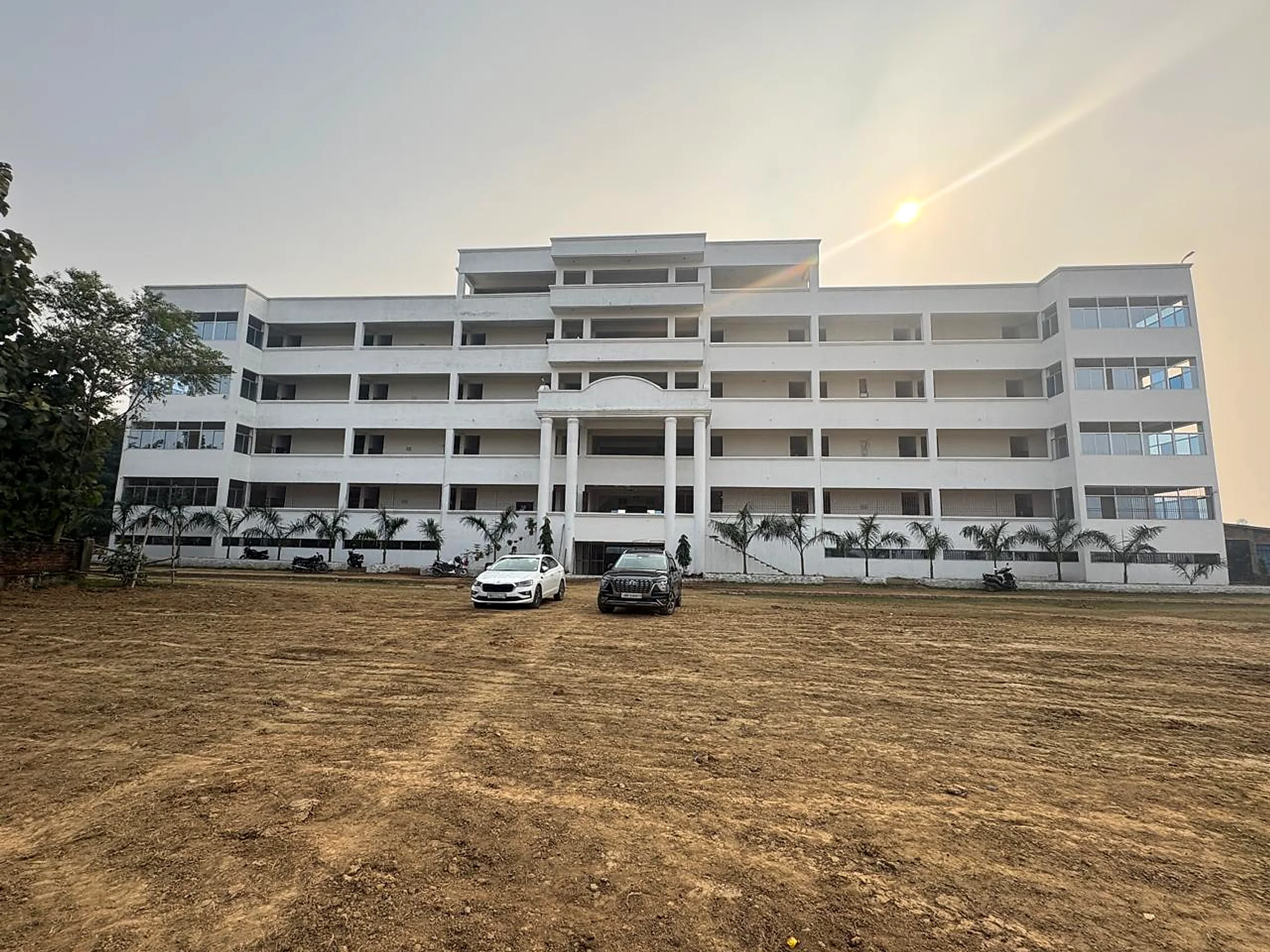
Most people who ask us about a medical college begin with the building. It is the wrong place to begin. Under the National Medical Commission's rules you cannot apply at all until you already own a large hospital that has been treating patients for years. The college is the last thing you build, not the first.
The rules moved recently. On 14 October 2026 the NMC de-notified the Maintenance of Standards of Medical Education Regulations, 2023. The Minimum Standard Requirements for undergraduate and postgraduate courses still apply in full, as does the Annual Disclosure Report, and the Medical Assessment and Rating Board still assesses and inspects. Much of what you will read online is now out of date. Confirm every figure below against the current notice on nmc.org.in before you commit money.
The rule nobody expects
The requirement that stops most projects is not land and not money. It is this: at the time you apply, you must already have a fully functional multi-speciality hospital, of the required bed strength, that has been running for at least two years.
Read that again. Two years of a real hospital, with real patients in the beds, before the application is even accepted. Not a building that is ready. A hospital that is working.
This single condition decides the shape of the whole project. It means the sensible sequence is: build and commission the hospital, run it properly for two years while it earns its own revenue, and apply for the college in that window. Anyone who builds a college block first has an expensive empty building and a two-year wait ahead of them.
What the assessors actually look at
When the Medical Assessment and Rating Board sends its team, they are not admiring the architecture. They check three things, and all three are hard:
- Faculty. The teaching posts have to be filled, by qualified people, who are actually present. This is the constraint that fails the most applications. Attendance is checked against a central biometric system, so names on a list are not enough.
- Clinical material. Enough patients, enough admissions, enough operations, enough deliveries, enough work in the laboratory and the imaging department. A half-empty hospital cannot teach, and the figures are counted.
- Infrastructure. Lecture theatres, laboratories, a skills laboratory, the library, hostels and the teaching spaces inside the hospital itself, each to a prescribed size.
Of the three, faculty is the one that keeps people awake. Beds can be built in a year. A full department of qualified teachers, in a district town, willing to stay, takes longer and costs more than anyone budgets for.
The cycle is annual, and it is slow
Permission is granted for a specific academic year, through an application window that opens once a year on the NMC portal. In a typical cycle the applications are scrutinised, assessors visit the institution physically or in hybrid mode, the reports are evaluated over roughly October to January, and the Letter of Permission is issued around February for the session that follows.
Miss the window, or fail on one count, and you wait a full year. That is why the preparation has to be finished well before the window opens, not during it.
After the Letter of Permission
The LoP is not the end. Within a few working days of receiving it the college has to file an undertaking accepting its conditions and furnish a bank guarantee. The NMC's fees and guarantee amounts are substantial and are set out in the notice for each cycle, so budget for them from the start rather than discovering them at the end.
Permission is also granted year by year at first. The college is assessed again as each batch progresses, and recognition of the degree comes later still, once the first batch is ready to graduate.
Where projects usually come apart
- Building the college before the hospital works. The commonest and most expensive mistake.
- Counting beds instead of patients. Occupancy and clinical workload are measured. Empty beds teach nobody.
- Leaving faculty to the last six months. Recruiting a full teaching cadre in a small town is a two-year job, not a two-month one.
- Treating the hospital as a cost centre. Run well, it funds the college. Run badly, it drains it for years.
- Relying on old guidance. The framework changed in October 2026. Anything written before that needs checking.
What this means if you are starting now
If you own land and nothing else, your first project is not a college. It is a hospital large enough to qualify later, built and commissioned properly, staffed and licensed, and then run as a real hospital for two years. Do that and the college application becomes a paperwork exercise on top of a working business. Skip it and no amount of construction will help.
That is the work we do: fitting out the hospital, obtaining every licence, recruiting and deploying the clinical and support team, and setting up how the place will run from its first day. We are doing exactly this now at a 650-bed teaching hospital in Jamui, Bihar, where the hospital is being made fully operational ahead of the inspection.
This guide is written to help you plan. It is not legal or regulatory advice, the figures change, and the current text on nmc.org.in governs. Talk to us, or to your own advisers, before you act on it.
Planning a hospital?
Tell us the town, the size and the timeline. We will tell you honestly what it takes.